
Denton, TX · Garage Door Service
Why Weather Seals Fail on Denton Garage Doors
Denton homes built mostly 1977-2014 are now at the age where garage door weatherstripping cracks and lets drafts in. Here's what that means for your door.
- Repairs & new doors
- Springs & openers
- Serving 4 nearby communities
What You Pay
We don't have a flat number to quote you here, because what a seal job costs depends on the door width, the track style, and whether the bottom astragal needs replacing along with the side and top weatherstrip. What we can tell you is what drives the variation: double doors need more material and more labor than a single, and if the track has rusted or bent where the seal rides, that's a separate repair, not just a strip of rubber. If someone quotes you a single flat price over the phone without seeing the door, be skeptical. Ask what's included - bottom seal only, or the full perimeter kit, because those are very different jobs. We'd rather look at the door and give you a real number than guess and be wrong by a lot. That's the honest answer, even though it's not as satisfying as a dollar figure.
What Most People Get Wrong
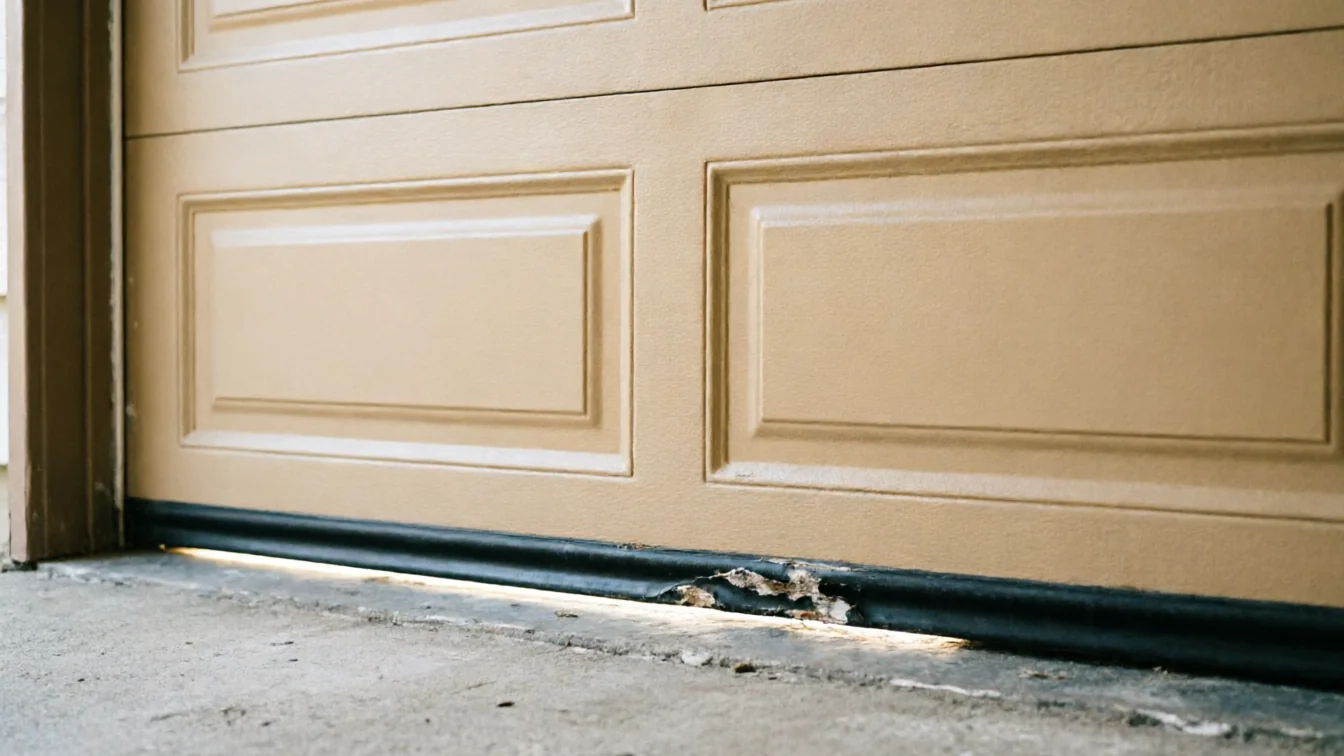
A lot of homeowners here assume that if the door looks like it's sitting flush, it's sealed. It isn't the same thing. Most of the housing stock in this service area went up between 1977 and 2014, with the typical build landing around 2003, and builder-grade doors from that era came with the cheapest vinyl bulb seal available at the time. That seal does its job for a few years, then starts to shrink and pull away from the aluminum retainer at the corners first, where you can't see it from inside the garage. People notice the draft before they notice the gap, usually on a cold morning when cold air is pooling along the floor near the door. By then the seal has usually been failing for a year or two. Checking the corners and the spot where the bottom seal meets the vertical track twice a year catches this before it becomes a comfort problem.
The Problem
Denton sits in a moderate heat band, not an extreme one, which matters more than people think. Doors here aren't getting hammered by the kind of daily swings that shred seals in a single season the way they would in a harsher climate. But moderate doesn't mean mild - over a decade of Texas summers, the rubber in a bottom seal and the vinyl bulb along the top and sides still dry out, harden, and shrink a little at a time. That slow shrinkage is the actual mechanism behind most draft complaints we see on doors from the early-to-mid 2000s housing wave that makes up most of this area's stock. It's not a storm event or a single bad week. It's cumulative heat exposure on a seal that was never built to last twenty years. Once the seal has hardened enough to crack when you bend it, patching won't hold - it needs full replacement, not a spot fix.
What Local Conditions Do
With median household income around $115,000 across the service area and roughly 40,441 owner-occupied houses out of 56,269 households, a fair number of people here own rather than rent, and ownership is usually what pushes someone to actually fix a drafty door instead of living with it. Denton sits in the middle of a cluster of smaller communities - Krum six miles out, Corinth and Shady Shores around seven, Argyle and Cross Roads near eight - and that geography means a lot of the housing nearby was built in the same stretch of years as Denton's own stock, so the same seal-aging problem shows up on a similar timeline across the area. The practical upshot: if your door went in anywhere in that 1977-2014 window, don't wait for a visible crack. A worn seal that's just hardened, not yet split, is the cheaper fix. Once it splits at a fold line, you're replacing the whole run, not patching a section.
Frequently asked questions
How do I know if my garage door seal is actually letting in drafts versus something else, like the door panel itself?
Run your hand along the bottom edge and the side tracks on a windy day. If you feel air moving at the bottom corners or where the seal meets the vertical track, that's the seal, not the panel. A shrunk seal pulls away right at the corners first, since that's where the vinyl is stretched the most.
Does the moderate climate here mean seals last longer than in hotter parts of Texas?
It likely means they degrade more slowly than in places with bigger daily temperature swings, but they still harden and shrink over a decade or more of sun and heat. Moderate isn't the same as no stress on the rubber - it just stretches the timeline out a bit.
My house was built in the early 2000s and I've never replaced the seal. Is that a problem?
Most of the housing in this area dates to roughly 1977 through 2014, with a lot of it built around 2003, so an original seal on a house that age is well past the point where vinyl and rubber stay flexible. Check the corners for cracking - if it's stiff and won't flex without cracking, it needs replacing.
Related garage door services in Denton
More garage door guides
Book garage door service in Denton
Call now or request a quote - tell us what the door is doing and where you are.